Tsiyon Messianic Radio Newsletter - Vol 21.08 - 12/07/6025
TAM - 02/24/2026 AD
|
|
 |
|
|
|
|
|
eliyahubendavid.substack.com/ |
From Eliyahu
I have wanted for some time to
write to you about a teaching
that has become very influential
in modern Christianity,
especially through television,
conferences, books, and now
social media. It is commonly
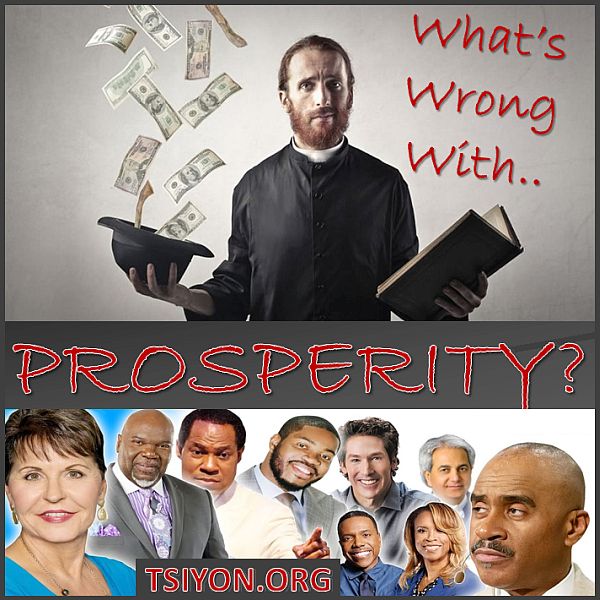
called the prosperity gospel
- sometimes “health and wealth”
teaching, or a form of “word of
faith” theology. Many sincere
believers have encountered it.
Some say they have found in it
an encouragement to pray with
expectation. Others, however,
have been deeply confused or
wounded by it. For that reason,
I want to address it plainly but
kindly: what it is, how it
developed, and why it is not
true to Scripture.
At first hearing, prosperity
teaching can sound appealing
because it often begins with
truths we all rightly affirm.
God is generous. God hears
prayer. God can heal. Faith
matters. God cares about our
needs. The problem is not that
prosperity teaching says any of
these things. The problem is
that it rearranges them and
shifts the center of the gospel
away from Messiah and onto
visible outcomes.
In practice, the focus moves
from the good news of Messiah
crucified and risen - to the
promise of health, money,
success, and breakthrough. Faith
is treated less as trust in the
living God and more as a method
for getting results. Giving can
be presented less as worship and
generosity and more as a
transaction. Prayer can begin to
sound less like humble
dependence and more like a means
of controlling God. Once that
shift happens, the gospel itself
has been distorted.
This teaching did not appear
overnight in its present form.
Like many errors, it developed
over time by exaggerating
certain truths and ignoring
others.
Scripture certainly speaks of
blessing. God blessed Abraham.
Israel was given covenant
blessings and covenant curses
under the Mosaic covenant.
Wisdom literature often teaches
that diligence tends toward
stability and folly tends toward
ruin. But over time, some
teachers began treating these
truths as if they were
universal, immediate guarantees
for all believers in every
circumstance. The Bible’s rich
and varied teaching on blessing
was flattened into a formula: if
your faith is strong enough, you
can force God to give you what
you want.
Alongside that came a change in
how faith itself was described.
In some circles, faith came to
be spoken of almost as a force
that could be activated,
directed, and released through
verbal confession. Words were
treated not simply as important,
but as instruments that could
secure desired outcomes if used
correctly. There is a grain of
truth here - our words matter,
and unbelief is real - but the
larger claim goes beyond
Scripture. The Bible does not
teach that human beings, by
verbal formulas, can command
reality into submission. God
speaks worlds into existence. We
do not.
Mass media then amplified these
ideas dramatically.
Televangelism, radio, and later
digital media created platforms
where large personalities could
spread promises of healing,
financial increase, and miracle
outcomes to millions of people
at once. Testimony-driven
messaging is powerful. It is
emotional, memorable, and easy
to share. It can also become
selective and manipulative.
In many settings, prosperity
teaching was presented not as
one perspective among many, but
as the evidence of true faith
itself. If you prospered, your
faith was working. If you
suffered, perhaps your faith was
weak. If you remained sick,
perhaps you had confessed
wrongly. If you remained poor,
perhaps you had not “sown a
seed” properly. Those
conclusions have brought real
pain to many.
We should also recognize why
this teaching spreads so easily.
It speaks to genuine human
fears. In poorer regions, it
offers hope to those living
under crushing economic
pressure. In wealthier
societies, it offers security to
anxious people who may have more
possessions but still live with
fear, loneliness, debt, and
uncertainty. In other words, the
prosperity gospel does not
appeal only to greed. It often
appeals to pain. That is one
reason we should address it with
both clarity and compassion.
Why, then, is it wrong? Not
because God never blesses
materially, and not because God
never heals, but because it
misrepresents both the heart of
the gospel and the pattern of
Biblical discipleship. The
gospel is the good news that the
Messiah died for our sins, rose
from the dead, and reconciles
all who repent and believe. Its
central promises are
forgiveness, reconciliation, new
birth, the indwelling Spirit,
adoption, sanctification,
resurrection, and eternal life.
These are not side benefits.
They are the treasure. The
prosperity message may still use
biblical language, but it often
pushes those realities to the
edges and puts material
well-being at the center. That
is not a small imbalance; it is
a serious corruption.
It also fails to reckon honestly
with the place of suffering in
the life of the true disciple.
Messiah did not call His
disciples to a life of
guaranteed outward success. He
called us to deny ourselves,
take up the cross, and follow
Him. The New Covenant does not
promise believers a life free of
hardship. It repeatedly prepares
believers for tribulation,
persecution, weakness, and
endurance. The apostles did not
treat suffering as proof that
faith had failed. They often
treated it as part of faithful
witness. A teaching that leaves
disciples unprepared for
suffering is not merely
incomplete; it is dangerous. It
may produce excitement for a
season, but it leaves people
spiritually disoriented when
real trials come.
Another major problem is the way
prosperity teaching can blur the
line between trust in God and
control over God. Biblical faith
says, “God is able.” Biblical
faith also says, “Not my will,
but yours be done.” Prosperity
teaching is more like, “My faith
can force God to do my will.”
Prosperity teaching often
encourages believers to expect
certainty where Scripture
teaches dependence. It can make
people feel that if they say the
right words, maintain the right
intensity, or give the right
amount, God is obligated to
produce a particular outcome.
But the Lord is not bound by our
formulas.
|
 
Consider the apostle Paul. He had faith.
He prayed. He served with devotion. Yet
he also suffered hunger, hardship,
imprisonment, and repeated affliction.
He learned contentment in abundance and
in want. He did not interpret every
hardship as a failure of confession or a
defect in faith.
This error is frequently sustained by
poor handling of Scripture. Verses are
lifted out of context and treated as
universal promises of financial
increase. Passages given to Israel in a
particular covenant setting are applied
directly to modern believers’ bank
accounts. Proverbs, which describes
general patterns of wisdom, are turned
into guaranteed outcomes. Narratives of
miracles are treated as formulas rather
than testimonies to God’s sovereign
power. This is not how Scripture should
be read. We must read the Bible in
context, in covenant context, in
literary context, and in the full
witness of God’s revelation, with
Messiah at the center.
Prosperity teaching also distorts the
meaning of giving. Scripture calls
believers to generosity, and often
speaks beautifully about sowing and
reaping. But generosity in Scripture is
rooted in worship, love, care for
others, and trust in God - not in a
promise that every gift will return as
personal financial multiplication. When
giving is presented as a mechanism for
wealth transfer from heaven to the
giver, covetousness can disguise itself
as faith. The act may look spiritual
while the heart is being trained in the
wrong direction.
Perhaps the most grievous damage appears
in what this teaching does to those who
suffer. A believer battling illness,
loss, poverty, or grief may already be
carrying a heavy burden. Prosperity
teaching often adds another burden:
shame. “If I had more faith, this would
not be happening.” “If I had spoken
better, perhaps this would have
changed.” “If I had given more, maybe
God would have answered.”
This is not how Messiah dealt with the
suffering. He was full of compassion. He
healed many, yes, but He also comforted,
wept, and taught His disciples how to
endure. Believers must never increase
the pain of the afflicted by tying their
worth or faithfulness to outcomes God
has not promised in their lives.
At this point, some may worry that
rejecting the prosperity gospel means
embracing pessimism or unbelief. It does
not. God still heals. God still
provides. God still answers prayer in
remarkable ways. We should pray boldly
for daily bread, for healing, for
deliverance, for open doors, for favor,
and for help. We should thank Him for
every gift. But we must do so as
disciples, not as spiritual consumers.
The biblical posture is confidence in
God’s goodness combined with submission
to His wisdom. He may grant abundance,
and we rejoice. He may allow lack, and
we trust Him. He may heal now, and we
praise Him. He may sustain us through
weakness, and He is no less faithful.
This brings us to an important point:
Scripture does teach prosperity, but not
in the way this movement often defines
it. The truest prosperity is first to
know God, to be reconciled to Him
through His Son, to walk in holiness, to
grow in likeness of the Son, and to
inherit the kingdom that cannot be
shaken. Material provision has its
place, and we should be grateful for it,
but it is not the measure of God’s
favor. God’s love is not proved by our
comfort, and His faithfulness is not
canceled by our trials.
What, then, do all believers need? We
need the true gospel proclaimed clearly.
We need Messiah at the center. We need
Scripture handled carefully, prayer
offered boldly but humbly, generosity
practiced without manipulation, and
compassion shown to those in pain. We
need to recover the language of
repentance, holiness, endurance,
contentment, and hope. We need
assemblies that can rejoice with those
who rejoice and weep with those who
weep, without forcing every story into a
success formula.
And we need to say something clearly to
wounded believers: if you trusted God
and still suffered, that does not mean
God has abandoned you. If you prayed and
the answer was not what you hoped, that
does not mean your faith was fake. If
you are walking through long affliction,
you are not disqualified from the love
of Messiah. The Lord is with His people
in the valley, not only on the
mountaintop. He is faithful in weakness
as well as in strength.
I am writing this because truth matters,
especially where suffering people are
concerned. Errors that flatter us are
often the hardest to confront. But
anything that moves Messiah from the
center, or places false guilt on the
afflicted, must be named and resisted.
Let us ask God for His blessings without
apology, but let us never confuse His
gifts with the gospel itself. Let us
seek His hand, yes - but above all, let
us seek His face.
All of this
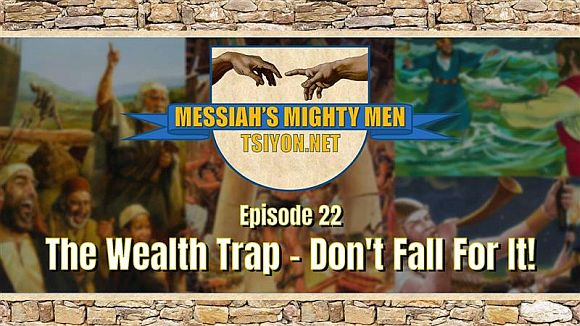
brings up an important related issue. We
call it The Wealth Trap. Our live
stream discussion tonight will be
a lively discussion on what Scripture
really says about wealth. That will be
at 8:00 Central
on
Tsiyon.Net and other video
platforms. This is an important topic
for us all, so we are excited to share
this with you.
In His Name, Eliyahu
Contact:
https://tsiyon.org -
https://eliyahubendavid.substack.com/
Join us tonight at
Tsiyon.Net
for this Panel Discussion!
|
 |
|
|
|
|
|
|
|
"Let them build Me a Sanctuary, that I may reside in their midst." Ex
25:8
| |
Thanks to our Tsiyon Ministry Partners for your support of this ministry!
Not a Tsiyon Ministry Partner yet? Visit our Tsiyon
Website
for full details.
|
|
|
|
|
|
|
Leave
feedback, prayer requests and comments
here.
You may unsubscribe
here.
|
|
|
Tsiyon
9901 Brodie Lane
Suite 160, Unit 1421
Austin, TX, USA, 78748
Please make offering checks to: "Tsiyon."
|
 |
 |
 |
|
|
|
|
|
|
|