Tsiyon Messianic Radio Newsletter - Vol 21.18 - 02/21/6026
TAM - 05/08/2026 AD
|
|
 |
|
|
|
|
From Eliyahu
What I am about to say applies to literally everybody.
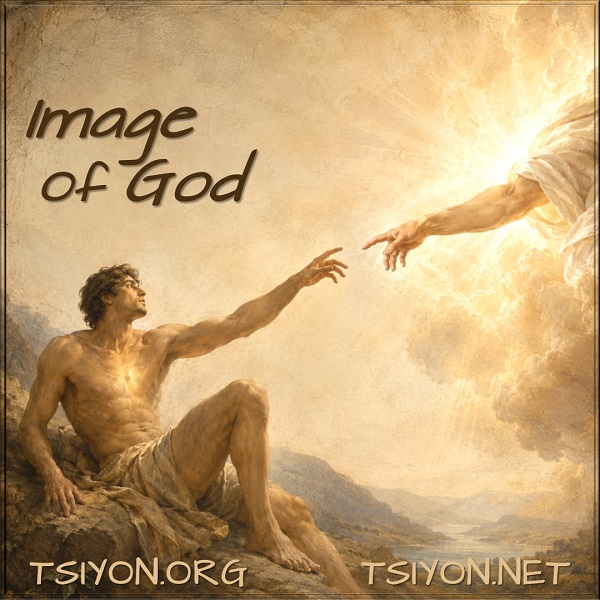
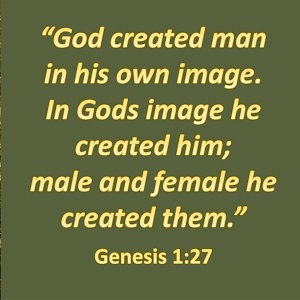
“God said, ‘Let’s make man in our image, after our likeness: and let
them have dominion over the fish of the sea, and over the birds of the
sky, and over the livestock, and over all the earth, and over every
creeping thing that creeps on the earth.’ God created man in his own
image. In God’s image he created him; male and female he created them”
(Genesis 1:26-27).
There are few statements in Scripture more important than this one. Before
we are told about Abraham, Moses, David, the prophets, the exile, or the
coming of Messiah, we are told what a human being is. Man is not introduced
as a clever animal who accidentally rose higher than the rest. Man is
introduced as the deliberate creation of God, made in His image, after His
likeness, and entrusted with dominion over the earth.
That single truth changes everything.
If a man is only an animal, then right and wrong are impossible to explain.
Love becomes chemistry. Worship becomes instinct. Human dignity becomes a
social preference. But if man is made in the image of God, then man has
agency to choose, life is sacred, moral responsibility is real, love has
meaning, and every person carries a significance that does not come from
government, society, wealth, power, intelligence, or usefulness.
Genesis places mankind in a category of its own. Animals are living
creatures made by God, and we should never treat them with cruelty. But they
are not given the dominion mandate. They are not addressed as moral covenant
partners. They are not told to subdue the earth. They are not described as
male and female in the image of God. That distinction belongs to mankind.
We can see this difference in at least three plain ways.
First, humans possess moral awareness. We do not merely act; we
exercise agency and we judge our actions. We ask whether something is right
or wrong. We feel guilt, shame, honor, duty, compassion, and responsibility.
A lion does not apologize for killing prey. A wolf does not hold court over
injustice. But mankind builds laws, writes moral codes, asks forgiveness,
and wrestles with conscience. This points to something more than instinct.
It points to the image of a moral Creator.
Second, humans possess unique spiritual capacity. Across history, men
have built altars, temples, synagogues, churches, and houses of prayer. They
have looked beyond the visible world and asked, “Who made us? Why are we
here? What happens after death? What does God require?” Animals may fear
danger, seek food, and care for offspring, but they do not seek the face of
YHWH. Man alone is called to worship, obey, repent, and enter covenant
relationship with the living God.
Third, humans possess extraordinary creative and governing ability.
We use language to preserve knowledge across generations. We write books,
record history, compose music, design cities, develop tools, heal diseases,
cultivate land, and explore the heavens. Animals build nests, dams, hives,
and dens by instinct. Man builds libraries, hospitals, farms, ships,
sanctuaries, observatories, and nations. This does not make every human wise
or righteous, but it does show the unique capacity God placed in mankind.
Genesis also says man was given dominion “over all the earth.” That
dominion can be seen all around us.
We see it in agriculture. Man plants, irrigates, cultivates,
harvests, stores, and distributes food. He takes seeds from the earth and
turns them into orchards, vineyards, fields, gardens, and bread. He
domesticates animals, manages herds, breeds livestock, and uses the strength
of creation for human life and service.
We see it in civilization. Man builds roads, bridges, homes, wells,
cities, ships, and systems of order. He turns raw materials into
instruments, tools, shelters, and technologies. He maps rivers, crosses
oceans, lights cities, and carries words around the world in moments.
We see it in our ability to understand and harness creation. We study
the stars, measure the seasons, discover medicines, use fire, shape metal,
generate power, and even send instruments into space. This is not the
achievement of a random beast. It is the mark of a creature designed to rule
under God.
But here we must be careful. Dominion does not mean man owns the earth apart
from God. The earth is YHWH’s. Man’s dominion is delegated authority. We
rule as stewards, not as thieves. We have authority over animals, but not
permission for cruelty. We have authority over the earth, but not permission
to destroy it for greed. The dominion mandate is not a license for
arrogance. It is a calling to responsible rule under the Creator.
Now we come to the deeper question: what does it mean to be made in the
image of God? What does that fact require of us?
We are physical beings. We have bodies formed from the dust. We hunger,
thirst, grow tired, feel pain, and eventually die. Yet Scripture teaches
that we are more than flesh. God “breathed into his nostrils the breath of
life; and man became a living soul” (Genesis 2:7). Man is earth and breath.
Dust and spirit. Body and inner life.
This is why human beings can stand with their feet on the ground and still
lift their hearts toward heaven. We can work in a field and pray to YHWH. We
can bury our dead and hope in resurrection. We can suffer injustice and
still appeal to the Judge of all the earth. We are physical beings, but we
are not merely physical beings. We were made in the image of God to know
God, and to do His will.
|
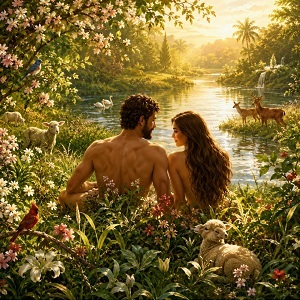 
This also helps explain why sin is so tragic. When animals act according to
appetite, they are being animals. But when humans live only by appetite, we
fall beneath our calling. We were made for more than hunger, pleasure, fear,
and survival. We were made to reflect the character of God.
That brings us to another part of the image of God: the capacity to reflect
divine attributes. Galatians 5:22-23 says,
“But the fruit of the Spirit is love, joy, peace, patience, kindness,
goodness, faith, gentleness, and self-control. Against such things there
is no law.”
These are not animal instincts. These are marks of God’s life working in
human beings. Love that sacrifices. Joy that endures sorrow. Peace that
remains steady under pressure. Patience that refuses revenge. Kindness
toward the weak. Goodness when no one is watching. Faithfulness in covenant.
Gentleness with power under control. Self-control over appetite and anger.
When humans live this way, we show what mankind was created to be. We become
living witnesses that man was not made merely to consume, compete, and die.
We were made to bear the image of God.
But Scripture is honest. Man can also behave like a beast.
Nebuchadnezzar is a powerful example. When his heart was lifted up in pride,
he was humbled until he lived like an animal. His reason departed from him,
and he ate grass like oxen until he learned “that the Most High rules in the
kingdom of men” (Daniel 4:32). That story is not only about one Babylonian
king. It is a warning to all humanity. When man rejects God, exalts himself,
and lives by pride, appetite, violence, and domination, he becomes
beastlike.
We see the same contrast in daily life. A man can use his strength to
protect, or he can use it to oppress. He can speak truth, or he can deceive.
He can love his family, or he can abuse them. He can rule his desires, or be
ruled by them. He can worship YHWH, or bow before idols of money, power,
pleasure, and self.
This is why the image of God is both a gift and a responsibility. It tells
us what we are, but it also calls us to become what we were made to be.
And this truth has powerful implications.
First, every human life has dignity. Male and female, young and old,
rich and poor, strong and weak, born and unborn, healthy and disabled -
human worth is not measured by productivity or status. It is rooted in
creation. Every person bears the image of God.
Second, every human being is morally accountable. Because we are not
animals, we cannot excuse sin as instinct. We may be tempted. We may be
weak. We may be shaped by pain, habit, and environment. But we are still
called to repent, obey, forgive, love, and walk before God.
Third, true human greatness is not found in domination, pride, or
self-exaltation. It is found in reflecting the character of YHWH. The world
often celebrates beastlike power - the power to crush, consume, and control.
Scripture points us higher. The greatest human life is one conformed to
God’s will. This is the life of the Son of God living in us.
Finally, the image of God points us toward restoration. Sin has damaged
mankind, but it has not erased God’s purpose. Through Messiah, the people of
God are being renewed, to each become the unique expression of the image of
God we were meant to be. By His Word and Spirit we are being taught and
empowered to live as image-bearers - not as beasts of appetite, not as
slaves of pride, but as sons and daughters who reflect the holiness, mercy,
truth, and love of YHWH.
Genesis tells us where we began. The prophets show us what went wrong.
Messiah shows us what man was meant to be, and He empowers us to achieve
that. And the Kingdom of God shows us where history is going.
Man was made in the image of God. That means we were made for worship,
wisdom, dominion, covenant loyalty, love, and holy responsibility. We were
made to rule the earth under God, not rebel against heaven. We were made to
reflect His character, not replace His authority.
So in a world that often tells us man is only another animal, Scripture
calls us to remember who we are.
We are dust, but we are more than dust.
We are flesh, but we are more than flesh.
We are creatures, but we are image-bearers.
And the highest calling of human life is not merely to survive, succeed, or
rule. It is to know YHWH, obey His Word, and reflect His glory in the earth.
That is what we should do, but there are powerful forces arrayed against us
to deter us from fulfilling that calling. That is the challenge of the
righteous – to live in an unrighteous world and yet to rise to the highest
level of our noble calling. This takes resilience, but we have been equipped
with everything we need to overcome.
The
Tsiyon Dudes are offering some practical ideas about maintaining our
resilience in the faith, even in the face of challenges. Tune in tonight at
8 PM Central at Tsiyon.Net and other popular video streaming platforms, and
invite others you know who are serious about walking in the image of God.
Come and be inspired.
In His Name, Eliyahu
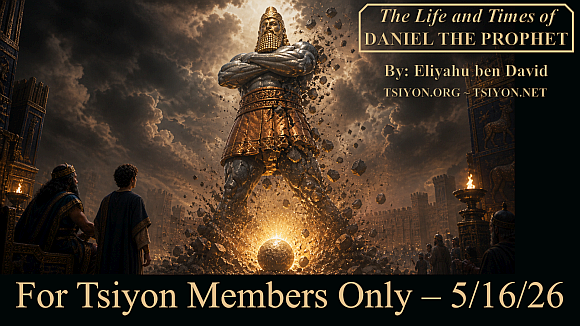
PS - We
have a special program for out Tsiyon Members next week. Don't miss it!
Contact: https://tsiyon.org - https://eliyahubendavid.substack.com/
|
|
SEE THIS TONIGHT! -
TSIYON.NET |
 |
|
TSIYON MEMBERS
ONLY! - 5/16/26 -
TSIYON.NET |
 |
|
|
|
|
|
|
| |
"The
nations
shall
know
that
I am
YHWH,
when
I
shall
be
sanctified
in
you
before
their
eyes."
Eze
36:23
Thanks to our Tsiyon Ministry Partners for your support of this ministry!
Not a Tsiyon Ministry Partner yet? Visit our Tsiyon
Website
for full details.
|
|
|
|
|
|
|
Leave
feedback, prayer requests and comments
here.
You may unsubscribe
here.
|
|
|
Tsiyon
9901 Brodie Lane
Suite 160, Unit 1421
Austin, TX, USA, 78748
Please make offering checks to: "Tsiyon."
|
 |
 |
 |
|
|
|
|
|
|
|