Isaiah looks
toward a day when YHWH will swallow up death forever: “He has swallowed up
death forever! The Lord YHWH will wipe away tears from off all faces.”
Isaiah 25:8
That is one of the greatest promises in the prophets. YHWH will not merely
comfort people while death continues forever. He will swallow up death
itself. Paul later echoes this promise when he writes, “Death is swallowed
up in victory.” He was not inventing a new doctrine. He was showing that the
resurrection of Messiah and the resurrection of the faithful fulfill the
hope already spoken by the prophets.
Ezekiel prophesies about national restoration, the regathering of Israel,
and the restoration of hope after exile. But the imagery is resurrection
imagery. YHWH opens graves. He brings His people up. He gives breath. He
causes the dead to live. The prophets do not separate the restoration of
Israel from the power of resurrection. The return of the remnant, the giving
of the Spirit, restoration to the Land, all lead to the hope of life from
the dead. YHWH reverses death.
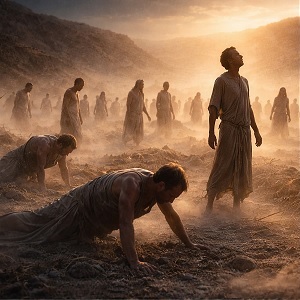
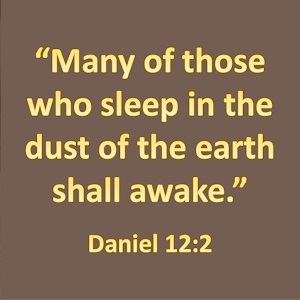
Then we come to Daniel 12:2: “Many of those who sleep in the dust of the
earth shall awake, some to everlasting life, and some to shame and
everlasting contempt.”
Here the
resurrection is tied directly to the time of the end. Daniel 12 speaks of a
time of trouble such as never was since there was a nation. Michael stands
up. Daniel’s people are delivered, everyone found written in the book. Then
those who sleep in the dust awake. Some awake to everlasting life. Some
awake to shame and everlasting contempt. Daniel then adds:
“Those who
are wise shall shine as the brightness of the expanse; and those who
turn many to righteousness as the stars forever and ever.” Daniel 12:3
Resurrection is
the hope of the wise. The faithful are not merely delivered from trouble.
They shine. Those who turn many to righteousness shine like the stars
forever and ever. So in Daniel, resurrection belongs to the final crisis,
the deliverance of the holy people, the book of life, the wisdom of the
righteous, and the end of the age.
This is why resurrection is essential to the biblical story.
Without resurrection, death wins over the body.
Without resurrection, the martyrs are not publicly vindicated.
Without resurrection, the promises to the faithful are reduced to memory or
metaphor.
Without resurrection, the Kingdom is incomplete.
The New Testament does not replace this hope. It reveals its center.
The center is Yeshua the Messiah.
He is the One who was cut off and yet lives. He is the firstfruits of those
who sleep. He is the resurrection and the life. His resurrection is not
merely a miracle for Himself. It is the beginning of the promised
resurrection harvest. Because He lives, the hope of Job, Isaiah, Ezekiel,
Daniel, and all the faithful is secure.
All of this is vitally important in our time. We live in a world
increasingly obsessed with defeating death by human means. Some hope for
biological immortality. Some hope for digital consciousness. Some hope for
medical breakthroughs, genetic manipulation, nanotechnology, artificial
intelligence, or other tools that may extend life far beyond what previous
generations imagined.
I am not against medicine. Healing is a mercy. Longer life can be a
blessing. But no technology can provide the resurrection promised by YHWH.
Man may try to delay death. YHWH raises the dead. That is a very different
hope.
The biblical hope is not that we preserve ourselves forever in the present
fallen order. The biblical hope is that YHWH will judge evil, defeat death,
vindicate the righteous, bring in His Kingdom and raise the dead,
That hope began to be offered long before the empty tomb was discovered.
The empty tomb revealed the One through whom it would all come.
The resurrection according to the Hebrew Scriptures is not a vague dream.
YHWH, who created man from the dust, will not allow death to have the final
word.
He will redeem from Sheol.
He will awaken those who sleep in the dust.
He will swallow up death forever.
He will vindicate the wise.
He will raise His people.
And through Messiah, He will bring the promise to its appointed fullness.
The world may offer many hopes. Some may be impressive. Some may even be
useful for a season. But only YHWH gives resurrection.
And because of that, the faithful can stand in the face of death and say
with Job:
“I know that
my Redeemer lives.”
We all must face the problem of death. We don't like it, but it's real.
Resurrection is the only real answer, and it's real, based on the promises
of our loving Heavenly Father. Please join us
tonight, May 24, 2026, 8 PM Central, at
Tsiyon.Net, and other
popular streaming platforms, for: The Blessed Hope. It's hard to
imagine a more uplifting subject than this.
In His Name, Eliyahu
PS -
Tomorrow, May 25, at sundown, Shavuot/Pentecost begins. It commemorates the
Covenant being given at Mount Sinai, and later, the Holy Spirit being
released from the resurrected Messiah on high. We will commemorate Shavuot
with special content throughout that evening and next day on Tsiyon Road
Radio at Tsiyon.Org for
your listening pleasure.
Contact: https://tsiyon.org - https://eliyahubendavid.substack.com/