From Eliyahu
I am excited to share my next newsletter with you in my series
entitled UFOs and the Occult – The Space-Age Mask of an Ancient
Deception. However, the next installment on that topic will have to wait
for next week, because I have an even more pressing message right now.
There is a strange tension rising up in the world. On one
hand, many serious believers look at the times we are living in and wonder
whether we are approaching, or are in, what Daniel called “the time of the
end.” We see increasing instability, moral confusion, deception, wars and
rumors of wars, global pressures, and now the rise of artificial
intelligence - a tool powerful enough to reshape communication, government,
economics, war, surveillance, education, and even the way people think about
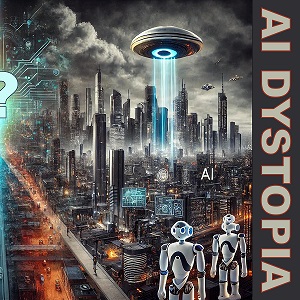
reality itself. Some of the very people who were involved in creating AI
technology are warning that it could literally bring on the end of humanity.
On the other hand, some of the most influential voices in technology
are speaking in almost opposite terms. They are not describing disaster.
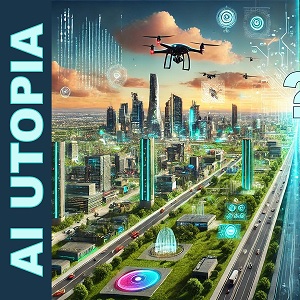
They are describing a coming age of abundance. Some speak of an
“Intelligence Age,” a world where AI makes knowledge, productivity, and
problem-solving widely available. Others imagine AI helping with medicine,
poverty, education, science, government, and human flourishing in ways that
would have seemed impossible only a few years ago.
So which is it? Are we approaching a golden age? Or the time of the
end?
I think the answer may be more complicated than either side usually
sees.
It may be that mankind is approaching a time of remarkable
capability and great danger at the same time. There will be real advances in
medicine, production, communication, education, and administration.
Governments are already exploring AI to improve public services,
decision-making, fraud detection, and productivity, while also warning about
risks such as bias, lack of transparency, overreliance, and loss of public
trust.
So we should not pretend that nothing good can come from these
tools. That would be foolish. A hammer can build a house or become a weapon.
A printing press can spread Scripture or propaganda. The internet can carry
truth or deception. Technology is not the same thing as righteousness, but
neither is every tool inherently wicked.
The deeper issue is not whether artificial intelligence can produce
benefits. The deeper issue is what fallen mankind will do with that power.
That brings us to Paul’s warning:
“For you yourselves know well that the day of the Lord comes like a
thief in the night. For when they are saying, ‘Peace and safety,’ then
sudden destruction will come on them, like birth pains on a pregnant woman;
and they will in no way escape.”
1 Thessalonians 5:2–3
Notice carefully what Paul says. He does not say destruction comes
when everyone is crying out in obvious terror. He says it comes when they
are saying, “Peace and safety.”
That means the danger is not only chaos. The danger is false
confidence. The danger is mankind believing it has finally solved the human
problem without YHWH. That is what makes our moment so spiritually serious.
Many people believe man is basically good. In that view, our deepest
problems come from ignorance, poverty, bad systems, lack of education,
trauma, inequality, or poor administration. If those things can be
corrected, then mankind can improve himself. If AI can help remove scarcity,
cure disease, educate the masses, manage resources, reduce conflict, and
improve government, then perhaps the world really can enter an age of peace
and safety.
There is enough truth in that view to make it persuasive. Education
is better than ignorance. Reducing poverty is good. Just laws bring
stability and order. Honest government would be a refreshing change. Better
health care could save lives. Wise use of technology can reduce suffering.
But Scripture gives a deeper diagnosis.
Man is made in the image of God. That means there is dignity in man.
There is creativity, conscience, intelligence, affection, moral capacity,
and the ability to do real good in the world.
But man is also fallen. There is sin in the human heart. That is the
part modern optimism often refuses to face.
Sin is not merely a lack of information. It is not merely poor
organization. It is not merely scarcity. Sin is rebellion against God. It is
pride. It is the desire to rule without YHWH. It is the old temptation: “You
will be like God.”
That is why abundance cannot solve the deepest human problem. A
sinful man with little power can do harm. A sinful man with wealth can do
more harm. A sinful man with political authority can do terrible harm. A
sinful man with empire can do almost unimaginable harm. And a sinful man
with artificial intelligence, surveillance systems, digital finance,
automated propaganda, biometric identity, cyberwarfare, and global
administrative reach could do harm on a scale earlier tyrants could not have
imagined. So, while technology can be used for good, it can also be a force
multiplier for evil at a level beyond anything the world has ever seen.
That is not just a movie or a TV show – that is reality. Even some
leading voices in AI safety have warned that AI risk should be treated as a
global priority alongside pandemics and nuclear war.
So the question is not merely, “Can AI make society more efficient?”
It probably can.
The question is, “Efficient toward what end, and under whose rule?”
Efficiency is not righteousness. Order is not holiness. Safety is
not salvation. Abundance is not the Kingdom. That distinction is vital.
The prophets speak of a coming age of peace, abundance, healing,
justice, and righteousness. But they do not say mankind brings that age by
his own intelligence. They say YHWH brings it through His Kingdom.
The problem with a man-made golden age is not that peace is bad.
Peace is good. The problem is not that safety is bad. Safety is good. The
problem is not that abundance is bad. Abundance is good. The problem is
peace without repentance, safety without righteousness, and abundance
without submission to YHWH. That is the last illusion. It is the belief that
man can build the blessings of the Kingdom while rejecting the King.