It is worth observing that the flying-saucer idea arrived at the perfect
cultural moment. World War II had just ended. Nuclear weapons had changed
the future of mankind. Rockets had become real. German scientists and
engineers were being brought into American programs. Science fiction was
growing in influence. The Cold War was beginning. Mankind was looking upward
— with fear, ambition, and imagination. So when the flying saucer appeared
in the public mind, it did not remain simply an unidentified object. It
became a symbol. It became a sign of the unknown future.
Here is the pattern: In the 1890s, mysterious aerial phenomena were often
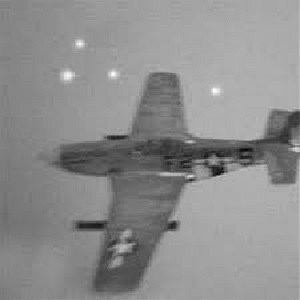
interpreted as airships. During World War II, strange lights seen by pilots
were suspected to be secret weapons. After 1947, the flying-saucer image
took over. Later, the mythology developed further: contactees, Space
Brothers, alien abductions, grey beings, crashed saucers, hidden bases,
hybrid programs, ancient astronauts, and government disclosure.
Today, the language has become more official and seemingly more careful. We
are told about UAPs, anomalous phenomena, nonhuman intelligence, and
national-security concerns. But the deeper pattern remains.
The unknown thing in the sky wears the mask the age is ready to receive.
When people dreamed of inventors conquering the sky, it was an airship. When
pilots flew through war, it was a secret weapon. When rockets and space
travel entered the public imagination, it became a flying saucer. When
modern people distrust government and expect hidden knowledge, it becomes
disclosure. This is why we must not be controlled by the mask. The mask is
not the thing itself.
The Bible teaches us that there is an unseen realm. The issue is not whether
every strange light is spiritual. That would be careless and unhelpful. Many
things in the sky have ordinary explanations. But Scripture also teaches
that deception is real. Spiritual powers can work through signs, wonders,
false messages, and human systems. The enemy does not need one method. He
can use fear, fascination, counterfeit knowledge, human ambition, occult
contact, political power, and false religion.
Paul wrote:
“For
our wrestling is not against flesh and blood, but against the
principalities, against the powers, against the world’s rulers of the
darkness of this age, and against the spiritual forces of wickedness in the
heavenly places.” - Ephesians 6:12
That verse does not tell us to call every unknown object a demon. It tells
us that the visible world is not the whole battlefield. So when an aerial
mystery becomes attached to a message, a mythology, or a new revelation,
Bible believers should pay close attention. The danger is not merely that
people may see something strange. The danger is that people may be taught to
interpret the strange thing as a message from a higher authority. The fact
is, humans can be very suggestable, and that tendency can be exploited to
deceive. Deception may come with signs and wonders:
“Even
he whose coming is according to the working of Satan with all power and
signs and lying wonders, and with all deception of wickedness for those who
are being lost, because they didn’t receive the love of the truth, that they
might be saved.” - 2 Thessalonians 2:9–10
Notice the issue: deception comes to those who do not receive the love of
the truth. The problem is not merely that people see a wonder. The problem
is that they accept a lie. This is why the UFO question cannot be reduced to
lights in the sky. The more important question is: what lie is being
packaged with the wonder?
If the phenomenon teaches people that mankind must look to mysterious
nonhuman powers for truth, salvation, origin, or destiny, then we are no
longer dealing merely with aerial objects. We are dealing with rival
revelation. That is where the pattern becomes spiritually dangerous.
What the Changing Mask Teaches Us
The mystery airships and foo fighters do not prove one simple explanation
for UFOs. They do not prove aliens. They do not prove secret technology.
They do not prove demons. They do not prove mass delusion. But they teach us
something very important: The interpretation changes with the age. That
should make us cautious.
The same world that once interpreted strange lights as airships later
interpreted strange lights as enemy weapons, then flying saucers, then alien
visitors, and now UAPs connected to possible nonhuman intelligence.
This suggests that the public story around the phenomenon is not merely
driven by evidence. It is also driven by cultural imagination. That is
exactly where deception can operate. The enemy does not need to create every
sighting. He only needs to shape the meaning people attach to them.
If the world already wants hidden knowledge, he can offer hidden knowledge.
If the world already wants a new origin story, he can offer ancient aliens.
If the world already wants global unity without repentance, he can offer
cosmic unity. If the world already rejects the Word of YHWH, he can offer
revelation from “higher beings.” The mask changes, but the temptation
remains familiar: You can know more than God has revealed.
There may be new technology. There may be new terminology. There may be new
media and new official language. But the spiritual pattern is not new.
Hidden knowledge. Forbidden contact. False messengers. Signs and wonders. A
promise of enlightenment apart from obedience to YHWH. A future without
repentance. A salvation without Messiah. Those are not new.
The modern world calls it disclosure. The old occult world called it
revelation from the masters. The ancient world called it wisdom from the
gods.
The Bible calls us to test the spirits.
“Beloved,
don’t believe every spirit, but test the spirits, whether they are of God,
because many false prophets have gone out into the world.” - 1 John 4:1
That is the command:
Not panic. Not mockery. Not fascination. Testing by His
Word.
**************
Messiah's Mighty Men are streaming a
vital discussion tonight entitled: Walking Worthy of His Name. Please join us tonight, June
22, 2026,
8 PM Central, at
Tsiyon.Net, and other
popular
streaming platforms for this stimulating discussion. By walking worthy of
His Name we can overcome the confusion of this age.
In His Name, Eliyahu
Contact: https://tsiyon.org - https://eliyahubendavid.substack.com/