|
TSIYON NEWS |
||
|
Tsiyon Messianic Radio Newsletter - Vol 21.43 - 08/14/6026 TAM -10/26/2026 AD |
||
 |
||
|
From Eliyahu |
||
|
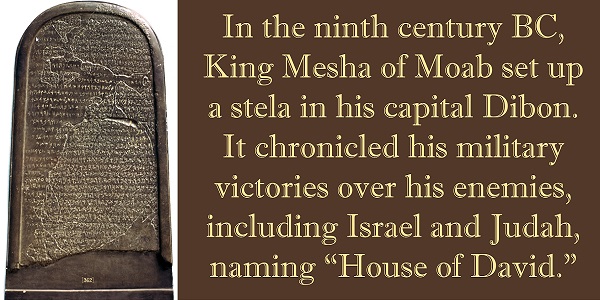
Archaeology Confirms Biblical History (and more) Skeptics once claimed that many of the people and places described in Scripture were legends and that the biblical narratives reflected religious myths rather than real history. Yet again and again, archaeological discoveries have challenged those assumptions. For more than two centuries, archaeologists have excavated the lands of the Bible, uncovering cities, inscriptions, seals, monuments, roads, and documents buried beneath the sands of the ancient Near East. Archaeology cannot prove every event recorded in the Bible, nor can it verify miracles, which by their very nature involve divine intervention. What archaeology can do is examine the historical setting in which biblical events occurred. If the Biblical history is proved to be real, then the supernatural events that are reported within that history must be taken seriously. In this role, archaeology has become one of the Bible's strongest allies. Rather than revealing an invented world, excavations repeatedly uncover evidence of the very kingdoms, rulers, customs, languages, and cultures described by the biblical writers. Archaeology has been constantly unearthing evidence for Biblical history since at least the 1800s. So much so that we could not possibly scratch the surface of all that has been discovered in this newsletter. Let us narrow it down to a few significant discoveries over the last decade. In that short time a number of significant discoveries have added to an already impressive body of evidence demonstrating that the Bible is deeply rooted in real history. Archaeology Confirms Biblical People One of the strongest ways archaeology supports the Bible is through inscriptions naming actual individuals mentioned in Scripture. A remarkable example is the discovery of the seal impression of King Hezekiah, one of Judah's most important rulers. The inscription identified the seal as belonging to "Hezekiah, son of Ahaz, king of Judah." This discovery provided direct archaeological evidence for a king whose reign is described extensively in 2 Kings, 2 Chronicles, and Isaiah. Even more intriguing was the possible discovery of a seal belonging to the prophet Isaiah. Found near Hezekiah's seal in Jerusalem, the inscription appears to contain Isaiah's name. Although scholars continue to debate whether the damaged inscription also contains the title "prophet," the find demonstrates that individuals known from Scripture occupied the very governmental and religious circles that archaeology continues to uncover. Another important discovery involved a bulla, or clay seal impression, bearing the name Nathan-Melech, a royal official mentioned only briefly in 2 Kings 23:11. Before the discovery, many would have considered such a minor figure impossible to verify. Yet archaeology produced evidence that a man with precisely that uncommon name served within Judah's royal administration. These discoveries illustrate a recurring pattern. The biblical record contains numerous references to real officials, kings, priests, and government servants. Archaeology increasingly demonstrates that these are not fictional characters but historical individuals who lived within identifiable historical contexts. Archaeology Confirms Biblical Places The Bible is filled with references to cities, roads, fortifications, temples, gates, and administrative centers. Modern excavations have revealed many of these locations. Perhaps one of the most impressive recent discoveries is the monumental pilgrimage road uncovered in Jerusalem. This road connected the Pool of Siloam to the Temple Mount during the first century. Archaeologists recovered coins beneath the pavement dating its construction to the period of Pontius Pilate. This discovery provides a vivid glimpse into the Jerusalem known by Yeshua and His disciples. Rather than being a small village with legendary significance, Jerusalem emerges as a bustling pilgrimage center with carefully planned infrastructure capable of accommodating thousands of worshipers, just as portrayed in Scripture. Similarly, excavations throughout Jerusalem continue to reveal evidence from the reign of Hezekiah. Storage facilities, administrative seals, defensive walls, and water systems all correspond to a period of rapid growth described in the Biblical account. The Bible records that refugees fled into Judah following Assyrian invasions of the northern kingdom. Archaeological evidence indicates that Jerusalem expanded dramatically during precisely this historical period. Archaeological discoveries repeatedly show that the Biblical authors possessed accurate knowledge of geography, government administration, and urban development. Such precision is difficult to explain if these accounts were merely late legends detached from actual history. Those historical details confirm that Bible books were written in the timeframe they claim to have been written in, otherwise the historical details of the given period would not be accurate. Yet they are. Archaeology Confirms Biblical Kingdoms One of the greatest debates among scholars has concerned the historical reality of ancient Israel and Judah. During the nineteenth century, some critics questioned whether the kingdoms described in Scripture even existed in the form presented by the Bible. Discoveries over the last century, however, have largely ended that debate. A key example is the famous Mesha Stele, an inscription from neighboring Moab. Continued analysis using advanced imaging technology has provided new information regarding difficult sections of the text. Scholars see additional support for references to the "House of David," strengthening evidence that David was not merely a legendary figure but the founder of a real royal dynasty recognized by neighboring nations, just as the Bible claims. Likewise, excavations throughout Judah continue to reveal administrative sophistication consistent with a functioning kingdom. Archaeologists have uncovered tax systems, record-keeping practices, official seals, military fortifications, and evidence of literacy. These findings align well with the Biblical portrayal of a structured monarchy rather than a loose tribal society. The cumulative effect is significant. Archaeology increasingly depicts Israel and Judah as real political entities operating within the broader world of the ancient Near East exactly as the Bible describes. |
||
 |
||
|
Archaeology Confirms the New Testament World The New Testament is likewise grounded in verifiable history. The Bible names rulers such as Herod, Pontius Pilate, Caiaphas, and various Roman officials. Archaeological evidence has independently confirmed many of these individuals. A notable recent discovery involved a bronze ring associated with the name "Pilate." While scholars debate whether the ring belonged personally to Pontius Pilate or to someone within his administration, it adds to an already substantial body of archaeological evidence confirming Pilate's historical existence. The first-century pilgrimage road in Jerusalem also sheds light on the New Testament era. The Gospels describe enormous crowds traveling to Jerusalem for festivals. Archaeology now reveals the physical infrastructure that made such pilgrimages possible. The result is a New Testament firmly anchored within a real historical environment. The people, places, politics, and cultural practices described by the Gospel writers increasingly correspond with archaeological findings. What Archaeology Can and Cannot Do While archaeology strongly supports the historical reliability of Scripture, it is important to understand its limitations. Archaeology cannot excavate faith. It cannot dig up salvation, the resurrection, or divine revelation. Historical evidence can establish that biblical events occurred within genuine historical settings, but it cannot compel belief in the spiritual meaning of those events. Likewise, the absence of evidence is not evidence of absence. Even after all this time archaeology has examined only a small fraction of ancient sites in the Biblical lands. Many cities remain partially excavated, and countless artifacts remain buried. Nevertheless, archaeology consistently moves in one direction. Rather than disproving Biblical history, discoveries repeatedly fill in details, confirm locations, identify historical figures, and illuminate cultural practices previously known only from Scripture. Real History - and More The greatest archaeological discoveries of recent years continue a pattern that has persisted for generations. Again and again, the spade confirms what the Biblical writers recorded. Ancient seals identify Biblical officials. Inscriptions mention Biblical kings. Roads, walls, cities, and administrative systems reveal the historical world described in Scripture. None of this proves the Bible solely by archaeological means, nor was archaeology ever intended to replace faith. Yet the evidence demonstrates that the Bible is not a collection of myths detached from reality. It is a record deeply embedded in the history of real nations, real rulers, real cities, and real events. As each new excavation uncovers another piece of the ancient world, the historical credibility of Scripture continues to be reinforced. The Bible does not invite us into a fictional past. It invites us into the story of God's dealings with humanity in the real world of history, a world whose traces still emerge from the ground today. Numerous archaeological discoveries keep showing us that the Bible is consistent with real history. That is good, but the Bible itself tells us something even more amazing about history. The Bible claims that YHWH, the Creator of the world, controls the flow of history. When we combine Bible prophecy with dates of certain events now documented by archaeology we see that truth proven before our eyes. YHWH declares:
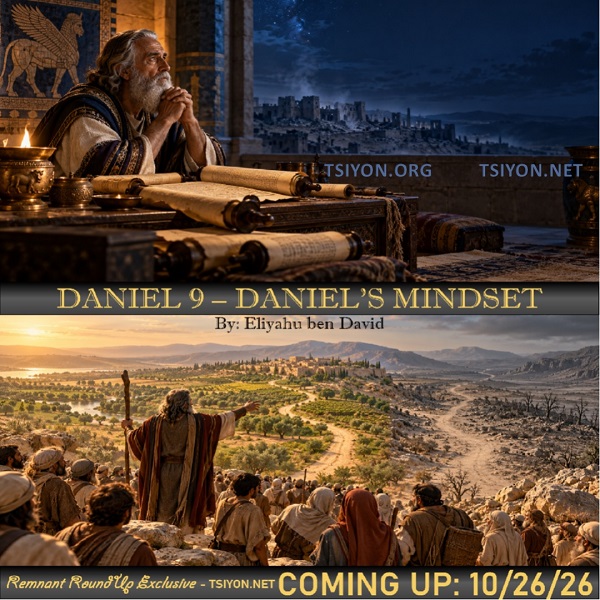
In my Remnant RoundUp presentations for our Tsiyon Partners we are seeing prophecies in Daniel, Ezekiel and other Bible books confirmed through fulfillment, with archaeological discoveries confirming, not only the events, but even the dating of the events as foretold. History is real. Archaeological discoveries confirming events and their dates are real. YHWH is real so prophecy is real, and is now confirmed by the historical evidence. History may seem random, but when we look at the details of the bigger picture through the Bible lens we can come to only one conclusion: YHWH is in control of history, and it is not random. It is unfolding His Great Plan. **********. Tsiyon Partners, because of the shortness of the time I am ramping up our Remnant RoundUp series in Daniel 9 for you, our Tsiyon Partners, to a twice per month schedule. Join me tonight, Oct. 26, as we dive deeply into Daniel 9 starting tonight. We will begin to unlock prophecies of Scripture that have been sealed up for thousands of years, waiting until now to be unsealed in the time of the end. As you follow along with me in this Remnant RoundUp series you will see these prophecies unfold in perfect accord with dates and events we now know are verified by archaeological discoveries, even with astronomical certainty. As we proceed through this study together, from one presentation to the next, you will get a far deeper understanding of the purposes of YHWH, and His absolute commitment to control the flow of history, to bring all things into conformity with His plans and purposes. Even the timing of these revelations being released is part of the fulfillment of the prophecies of Daniel. This is not just a stimulating intellectual pursuit either. This is being released now because we need this now! You will have to understand the prophecy first, to understand why it is so vital to the remnant now. That is why I keep urging you not to miss any of this. Please be there tonight at 7:45 PM CST for our musical program, with the main event starting at 8 PM CST only at Tsiyon.Net. Remnant RoundUp is special for those who are beyond free guests, who have committed to partnering with Tsiyon in this end-time work. Thank you so much for your partnership in this unique mission. In His Name, Eliyahu PS - If you are not a partner yet we are glad to have you visiting with us as a free guest. We have a lot of free content for you to enjoy. At any time you choose you may become a Tsiyon Partner by clicking/tapping the Remnant RoundUp button below. Contact: https://tsiyon.org - https://eliyahubendavid.substack.com/ |
||
|
Tsiyon Partners: Do not miss this special - Tonight! |
||
 |
||
|
Not a Tsiyon Partner yet? Tap or click below. |
||
|
|
||
|
Audio: |
||
|
||
|
"The nations shall know that I am YHWH, when I shall be sanctified in you before their eyes." Eze 36:23
Thanks to our Tsiyon Ministry Partners for your support of this ministry!
|
||
|
Copyright 2026 Tsiyon |
||
|
||
|
||
|
Tsiyon 9901 Brodie Lane Suite 160, Unit 1421 Austin, TX, USA, 78748
|
||
 |
||
 |
||
 |
||